
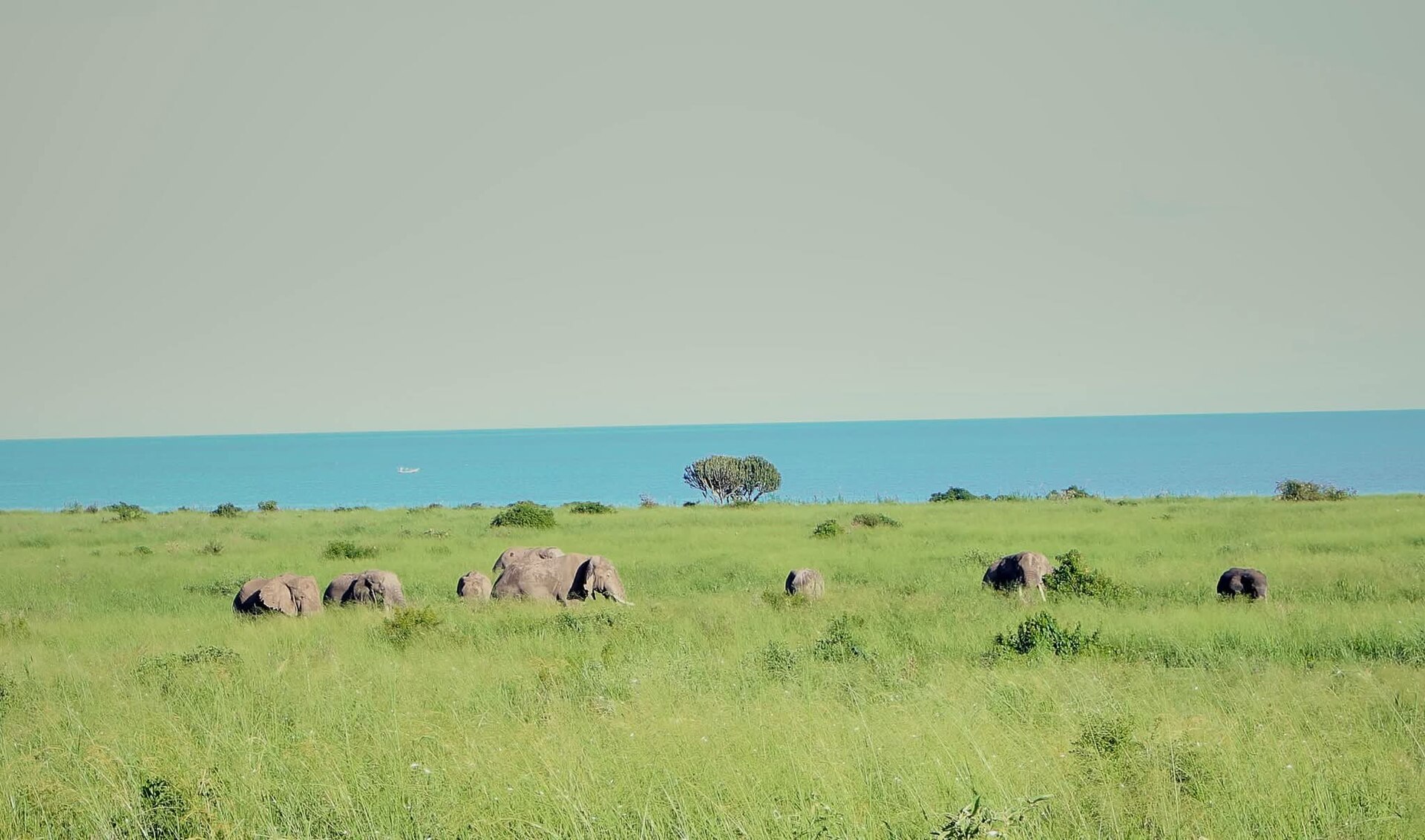
Hundreds of elephants have been seen again in parts of Virunga National Park, where their feeding and movement are helping reopen habitats for other wildlife.
In Virunga National Park, elephants are returning in numbers large enough to change the look of the land. Their presence is not only important because elephants are impressive animals. It matters because they are ecosystem engineers, capable of opening paths, clearing dense vegetation and creating space that other species can use.
Reports from Virunga describe hundreds of elephants moving through areas where their feeding is helping transform thickets back toward a more open forested savannah. As the animals push through vegetation and feed on shrubs and trees, they create trails and clearings. Those changes can benefit buffalo, antelope, warthogs and other animals that rely on more open habitat.
The return sits alongside other encouraging signs in the park, including rare gorilla twins. Together, such observations suggest that parts of the ecosystem are showing resilience after years of pressure. Virunga is one of Africa’s most important protected areas, but it is also a place where conservation has required exceptional commitment from rangers and local teams.
Elephants need space, safety and time. When they are absent, landscapes can shift. When they return, their behaviour restores processes that no machine can easily replace. Their appetite, weight and movement become ecological forces.
The story from Virunga is not a claim that all pressures have disappeared. It is a record of living animals returning and beginning to do the work they have always done. In conservation, that kind of visible function is often more important than a simple headcount.
Source: Good News Network