
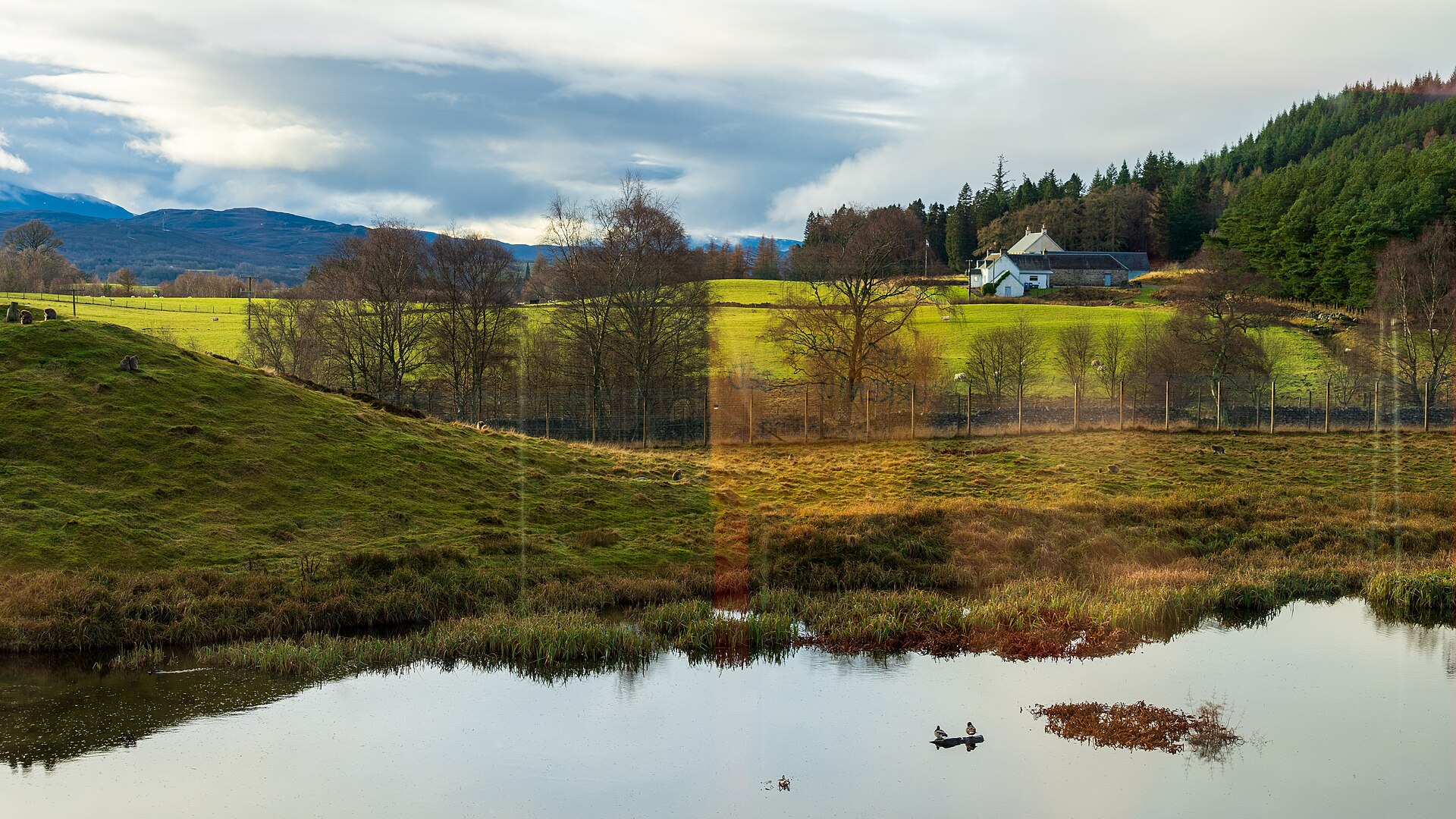
New research surveying more than 100 rewilded sites across Scotland found bird species up 261 percent and pollinators more than doubled compared to non-rewilded areas.
The data from Scotland is striking enough that the researchers who analysed it used the word astonishing. Across more than 100 rewilded sites surveyed in Scotland and compared with nearby non-rewilded areas, the number of bird species present on rewilded land was 261 percent higher. Their breeding territories were 546 percent higher. These are not marginal improvements. They are transformations.
For pollinators, the picture was similarly dramatic. The variety of bumblebee and butterfly species more than doubled on rewilded land. Their overall abundance increased more than tenfold. The number of nectar-rich plants available to them in rewilded areas rose by around 250 percent. The cascade effect of rewilding, in which restoring one element of an ecosystem triggers improvements across many others, is visible in these numbers.
Dr Ross Macleod, an ecologist at Liverpool John Moores University who analysed the data, noted that threatened species were showing particularly strong responses. Spotted flycatcher, cuckoo and woodcock, all of which have declined catastrophically across Britain in recent decades, were relatively common on rewilded areas. In a country where many familiar birds have become rare in a single generation, this reversal is significant.
Rewilding in Scotland takes many forms. Some sites involve the removal of deer fences to allow natural regeneration of native woodland. Others involve the reintroduction of beavers, whose dams slow rivers, create wetlands and support an extraordinary range of associated species. Others focus on the removal of invasive species or the restoration of peatlands that have been drained for agriculture.
What the research demonstrates is that across all these different approaches, the common outcome is recovery. Nature, given the space and the time, responds faster than many ecologists expected. The question is no longer whether rewilding works. The question is how quickly it can be scaled.
For Scotland, the implications extend beyond ecology. A landscape with more wildlife supports tourism, improves water quality, reduces flood risk and stores carbon. The practical arguments for rewilding have been accumulating alongside the ecological ones, and the data from these 100 sites adds weight to both.
Source: Positive News