
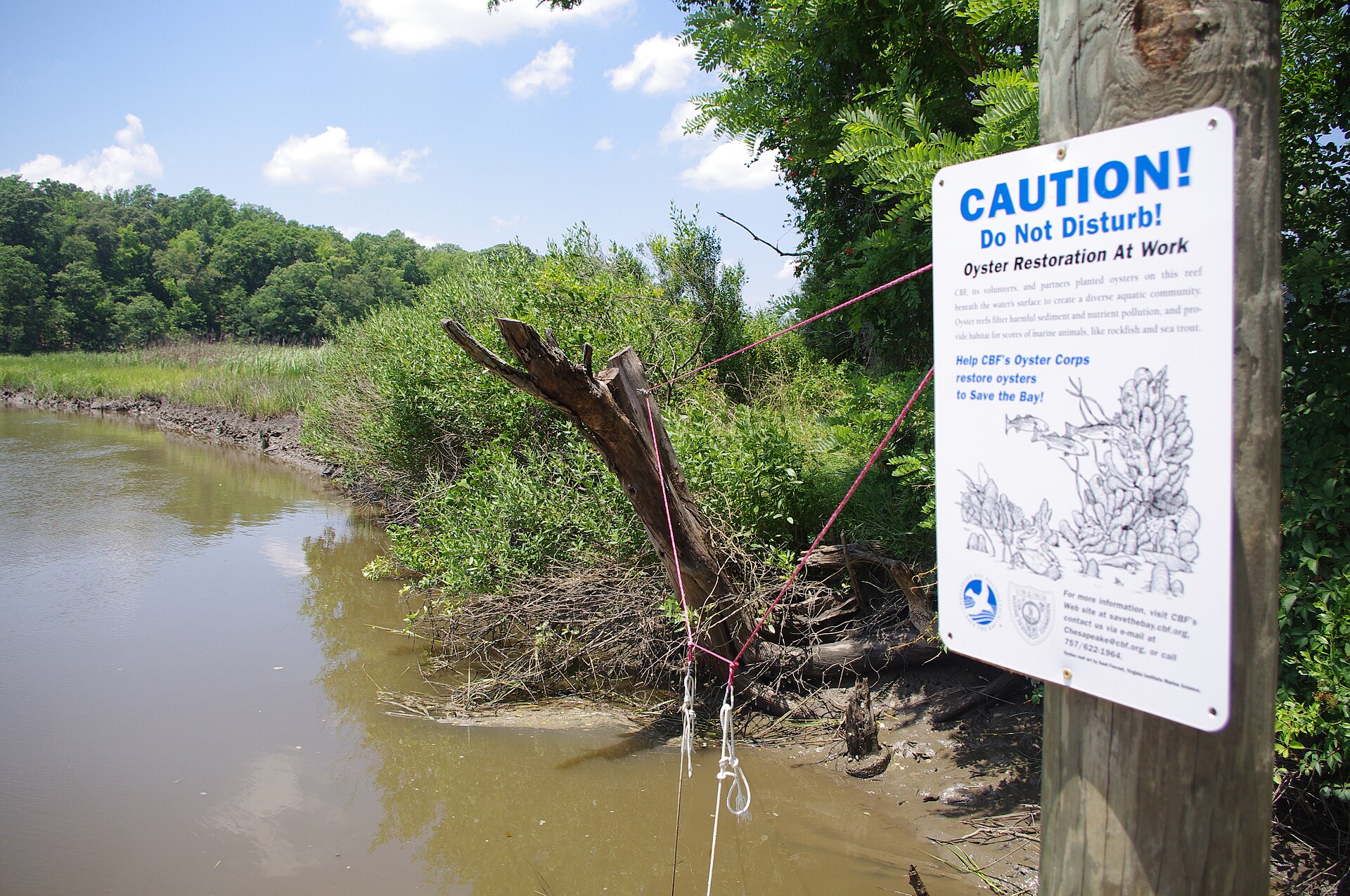
Tens of thousands of native oysters have been placed in a Welsh estuary as part of a project to restore living reef habitat.
In the Daugleddau Estuary in Pembrokeshire, a living reef is being rebuilt with native oysters. Around 50,000 oysters have been deployed as part of a restoration effort intended to bring back a species that once played a much larger role in British coastal waters.
Oysters are easy to think of as seafood, but in ecological terms they are builders. A healthy oyster reef filters water, creates hard surfaces for other organisms and provides shelter for young fish and invertebrates. As shells accumulate, the reef becomes a three-dimensional habitat rather than a flat seabed.
Native oyster populations declined over many years because of overharvesting, pollution, disease and habitat loss. Restoring them requires more than placing animals in the water. The site must have suitable conditions, and the oysters need to survive long enough to grow, reproduce and begin forming a reef that can support itself.
The Welsh project is part of wider work to restore coastal habitats such as oyster reefs, seagrass and kelp. These systems do quiet but important work: cleaning water, storing carbon, stabilising seabeds and supporting marine life.
The first oysters are only the beginning. A restored reef takes time to form, and the project will need monitoring to show survival and growth. But the principle is already visible. A damaged coastal habitat is not only being protected from further loss; it is being actively rebuilt.
Source: Positive News