
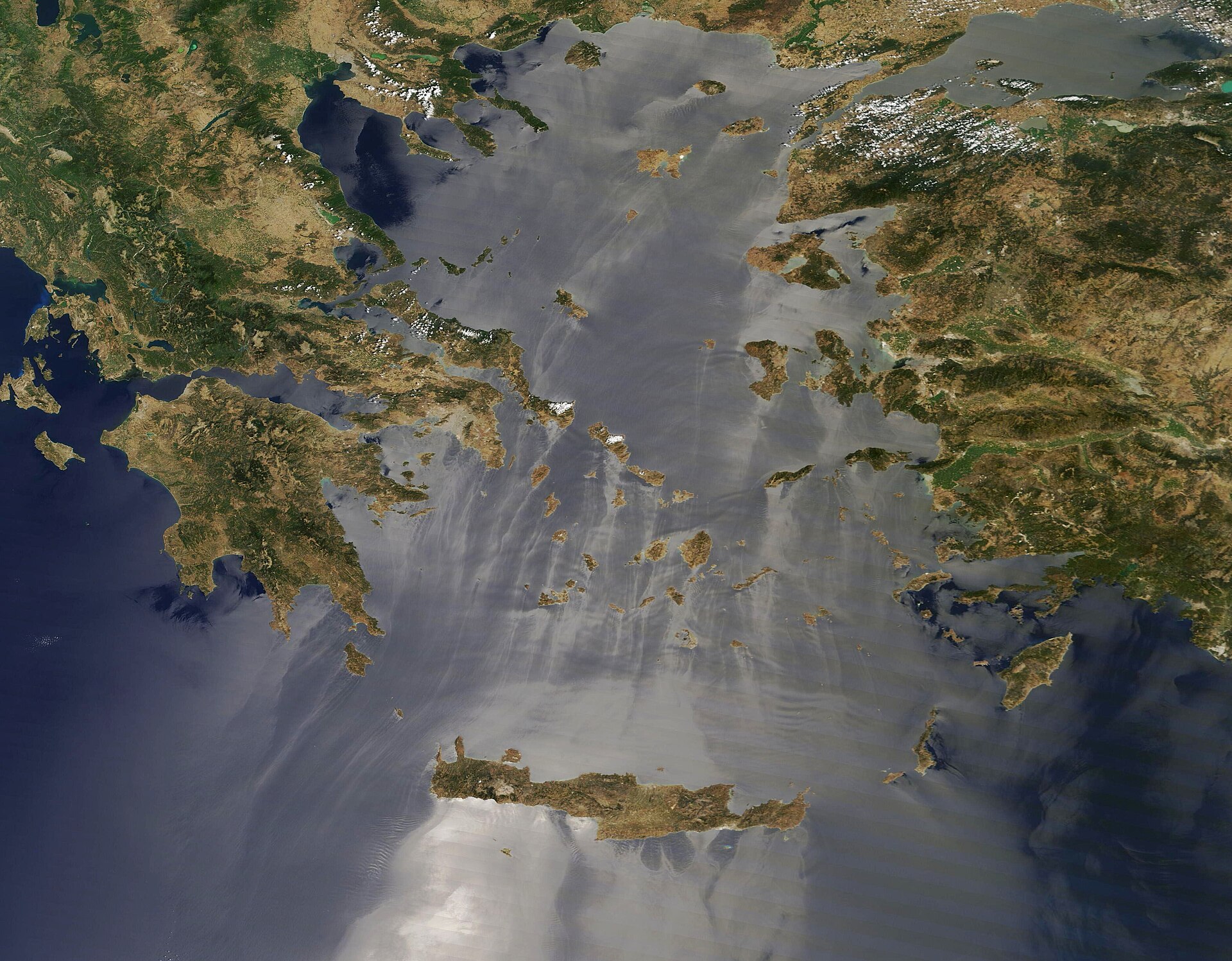
Greece has been named Europe’s top pick for a slower and more relaxing summer in 2026, as travellers increasingly seek landscapes, local culture and unhurried pace over crowded circuits.
There is a kind of travel that is not about accumulating sights. It does not involve lists of things to see, queues at famous landmarks, or evenings spent planning the next day’s itinerary. It involves arriving somewhere, settling into a rhythm, eating what is local and seasonal, walking at a pace dictated by curiosity rather than a schedule. Euronews named Greece as Europe’s top destination for this kind of summer in 2026.
Greece offers an unusual range of landscapes within a relatively small country. Its coastline runs for nearly 14,000 kilometres, the longest in the Mediterranean and one of the longest in the world. Its islands range from the well-known Cyclades, with their white-washed villages and Aegean light, to remote Ionian islands and Dodecanese outposts where tourism has barely changed the rhythm of daily life. Its mainland includes the rugged Mani peninsula, the forested mountains of Epirus and the river gorges of the Pindus, landscapes that receive only a fraction of the visitors that crowd the islands.
The food culture of Greece is inseparable from slow travel. The taverna that opens when the fishing boats come in, the morning market where the produce reflects what is growing in the valley behind the town, the ritual of a long lunch in the shade of a vine-covered pergola, these are not tourist experiences grafted onto a destination. They are the ordinary texture of Greek life, still largely intact in the smaller islands and rural mainland.
Greek hospitality has a particular quality that travellers describe as genuine rather than performed. It is partly cultural, rooted in the ancient concept of philoxenia, the love of strangers, and partly practical, in that tourism has been important to the Greek economy for generations and the welcome extended to visitors reflects a long and real interdependence.
The trend toward slow travel, which Euronews identified in naming Greece as Europe’s top pick, reflects something broader in how Europeans are thinking about holidays. After years of optimising travel for maximum coverage of a destination, something is shifting toward quality of experience over quantity of places visited.
Greece in summer is intense, warm, loud in the evenings and quiet in the afternoons. Its light at the end of the day, falling across white stone and blue water, has been described in poetry and painting for three thousand years. It is still there.
Source: Euronews