
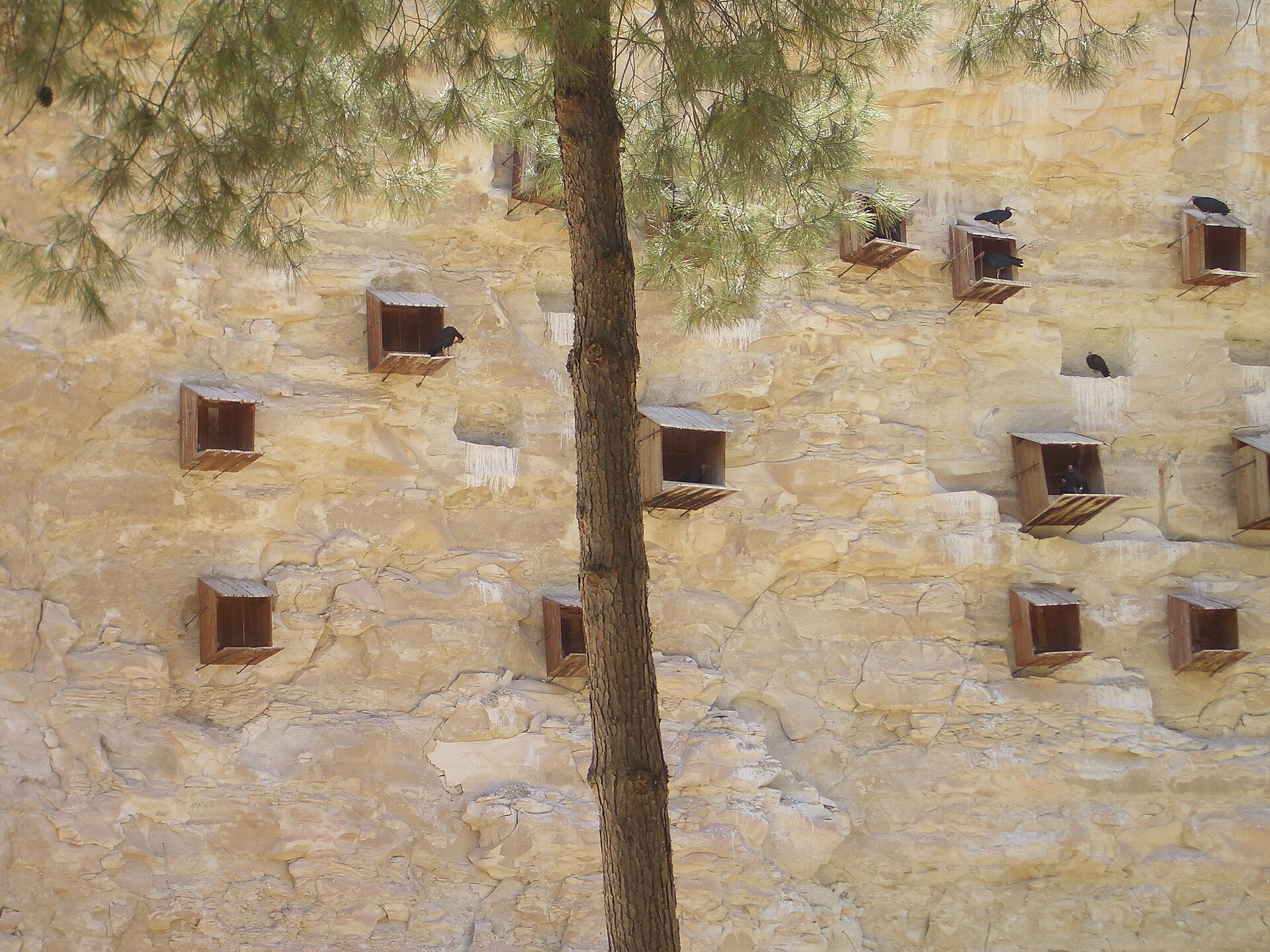
A semi-wild breeding programme in Turkey has kept the northern bald ibis alive locally and rebuilt a population of several hundred birds.
In southeastern Turkey, the northern bald ibis has become a conservation story built on persistence rather than speed. The bird is unmistakable: glossy dark feathers, a bare reddish head and a long curved bill. For generations it was part of local seasonal life, but across much of its wider range the species fell sharply as habitat loss, hunting pressure and changing land use took their toll.
Turkey’s answer was a semi-wild breeding centre near Birecik. The approach accepts a practical truth: some species are not yet safe enough to leave entirely alone, but they also should not be reduced to museum pieces behind glass. The birds are protected, bred and managed, while still living with many natural behaviours and remaining connected to the local landscape.
The breeding centre is now credited with keeping a population of several hundred northern bald ibises alive in semi-wild conditions. That is not the same as the species being secure everywhere, and it does not erase the work still required across its range. But it changes the local story from disappearance to survival.
The cultural value of the bird is part of the reason the work matters. In places where people recognise a species as a sign of the season, conservation becomes more than a technical project. It is also the protection of a relationship between a community and the natural calendar around it.
The northern bald ibis is sometimes called a herald of spring. In Turkey, that phrase is more than a poetic line. It now describes a bird that is still arriving, still breeding and still present because people refused to let it become only a memory.
Source: Good News Network